Car Door Panels Industry Trends: How Lightweight Interior Components Are Shaping the Future of Automotive Manufacturing
Introduction: The Changing Role of Car Door Panels in Modern Vehicles
When discussing automotive innovation, attention is often focused on electric power systems, autonomous driving technology, or smart vehicle platforms. However, many important improvements are happening inside the vehicle cabin, where components such as Car Door Panels directly influence passenger experience.
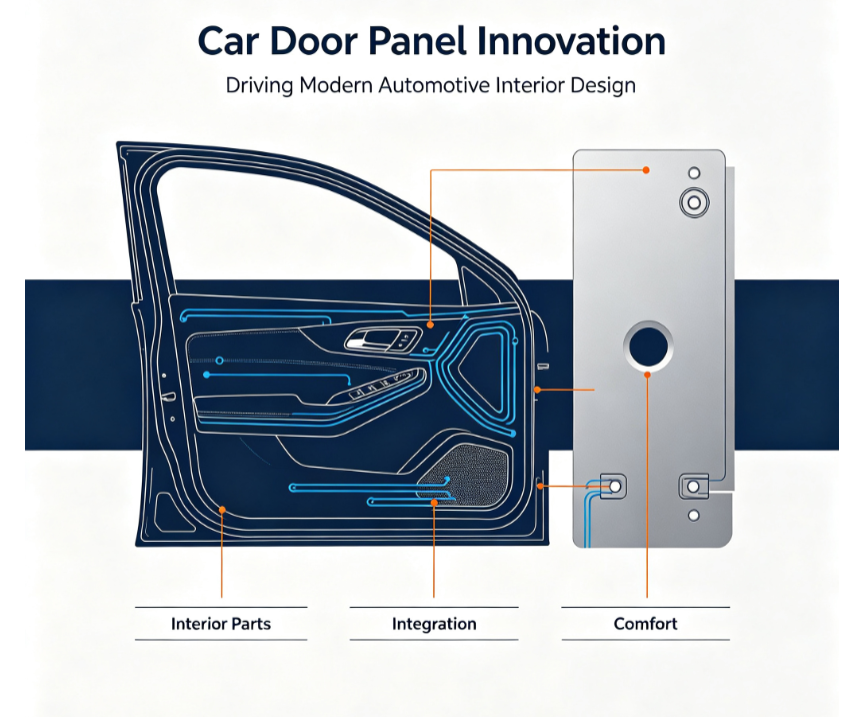
Modern car door panels are no longer simple decorative covers. They have become multifunctional interior components that combine structural support, acoustic performance, lightweight design, safety considerations, and aesthetic requirements.
As global automotive manufacturers accelerate the development of electric vehicles and intelligent cabins, the requirements for automotive interior components are becoming more demanding.
Manufacturers now need Car Door Panels that can provide:
· Lower vehicle weight
· Better noise insulation
· Improved durability
· Flexible design options
· Efficient mass production
The evolution of automotive door panels reflects a broader industry shift — vehicles are becoming more comfortable, more efficient, and more focused on user experience.
Table of Contents
· The Growing Importance of Car Door Panels in Automotive Design
· Why Lightweight Automotive Interior Components Are in Demand
· Materials and Technologies Behind Modern Door Panels
· Key Manufacturing Challenges in Car Door Panel Production
· Car Door Panels Material Performance Comparison
· Global Automotive Trends Driving Door Panel Innovation
· How Manufacturers Improve Car Door Panel Quality
· Future Development Trends of Automotive Interior Components
· Frequently Asked Questions
The Growing Importance of Car Door Panels in Automotive Design
A vehicle door is a complex system that combines mechanical structures, safety components, electronics, and interior design elements.
Within this system, Car Door Panels serve multiple purposes beyond appearance.
They contribute to:
Interior Comfort
The door panel is one of the largest visible surfaces inside a vehicle.
Its material quality affects:
· Touch experience
· Visual appearance
· Cabin atmosphere
· Passenger comfort
As automotive brands compete through interior design differentiation, high-quality door panels have become an important part of vehicle identity.
Noise Reduction Performance
Noise control has become increasingly important, especially with the rapid growth of electric vehicles.
Traditional vehicles naturally produce engine noise, while electric vehicles operate more quietly. As a result, passengers become more aware of:
· Road noise
· Wind noise
· Vibration sounds
Car door panels work together with sealing systems and acoustic materials to improve cabin quietness.
Functional Integration
Modern door panels often integrate multiple functions, including:
· Window control switches
· Speakers
· Ambient lighting
· Storage compartments
· Electronic modules
This requires precise design and manufacturing to ensure all components fit correctly.
Automotive Requirement | Industry Challenge | Door Panel Development Direction |
Lightweight vehicles | Reduce overall vehicle weight | More advanced plastic and composite materials |
Quiet cabin experience | Control vibration and noise | Better acoustic structures |
Smart interiors | Integrate electronic functions | Higher precision manufacturing |
Personalized design | Different appearance requirements | Flexible surface processing |
Why Lightweight Automotive Interior Components Are in Demand
Vehicle weight reduction has become one of the most important trends in automotive engineering.
According to international automotive industry research, lightweight vehicle design can improve fuel efficiency and extend electric vehicle driving range by reducing energy consumption.
Because interior components represent a significant portion of vehicle weight, manufacturers are continuously exploring lighter materials for parts such as:
· Door panels
· Instrument panels
· Seat structures
· Interior trims
For electric vehicles, lightweight design has even greater importance because reducing weight helps optimize battery efficiency.
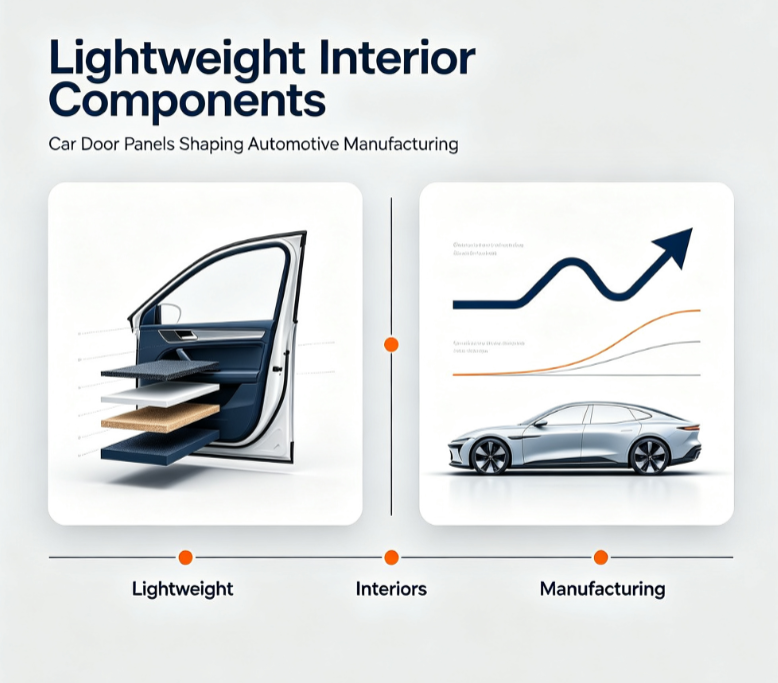
Modern Car Door Panels are increasingly designed with:
· Optimized structures
· Lightweight polymers
· Composite materials
· Reduced material usage without sacrificing strength
The goal is not simply making parts lighter. It is achieving the best balance between:
· Weight
· Strength
· Safety
· Cost
· Manufacturing efficiency
Materials and Technologies Behind Modern Door Panels
Material selection plays a major role in determining door panel performance.
Different vehicle categories require different solutions.
Polypropylene (PP) Materials
Polypropylene is one of the most commonly used materials in automotive interior components.
Advantages include:
· Lightweight characteristics
· Good impact resistance
· Cost efficiency
· Easy processing
It is widely used in high-volume vehicle production.
ABS Materials
ABS plastics are valued for their appearance and processing performance.
They are commonly used for areas requiring:
· Smooth surfaces
· Decorative finishing
· Dimensional accuracy
Composite Materials
Advanced composite materials are becoming more important in premium and electric vehicles.
They offer potential advantages such as:
· Higher strength-to-weight ratio
· Improved structural performance
· Greater design flexibility
Surface Finishing Technologies
The appearance of automotive interiors strongly influences customer perception.
Modern door panels may use:
· Textured surfaces
· Soft-touch coatings
· Decorative layers
· Fabric or leather-style finishes
These technologies help manufacturers create differentiated interior experiences.
Key Manufacturing Challenges in Car Door Panel Production
Producing high-quality automotive door panels requires strict control throughout the manufacturing process.
Precision Requirements
Automotive components must fit accurately during vehicle assembly.
Small dimensional errors may lead to:
· Assembly problems
· Unwanted noise
· Poor interior appearance
Manufacturers need advanced production control to maintain consistency.
Surface Quality Control
Because door panels are highly visible, surface quality is critical.
Important factors include:
· Texture consistency
· Color matching
· Scratch resistance
· Finishing quality
Balancing Cost and Performance
Automotive suppliers must constantly balance:
· Material cost
· Production efficiency
· Product durability
· Design requirements
The best solution is usually not the most expensive material, but the one that provides the right performance for the application.
Car Door Panels Material Performance Comparison
Material Type | Main Advantages | Typical Applications |
Polypropylene (PP) | Lightweight, economical, impact resistant | Mass production vehicles |
ABS Plastic | Good surface appearance and processing ability | Interior decorative components |
Composite Materials | Higher strength and weight advantages | Premium vehicles and EV applications |
Natural Fiber Composites | Renewable material options | Sustainable automotive interiors |
Material selection depends on vehicle positioning, production volume, environmental requirements, and customer expectations.
Global Automotive Trends Driving Door Panel Innovation
The automotive industry is undergoing major changes, and these changes are influencing interior component development.
Electric Vehicle Expansion
The growth of electric vehicles is changing automotive interior priorities.
Because EVs produce less engine noise, manufacturers are paying more attention to:
· Acoustic comfort
· Interior material quality
· Vibration control
This creates new requirements for advanced door panel solutions.
Smart Vehicle Development
Modern vehicles increasingly integrate digital technologies.
Door panels are becoming platforms for:
· Electronic controls
· Lighting systems
· Sensor integration
· User interaction features
Future door panels will likely include more intelligent functions while maintaining lightweight designs.
Sustainable Material Demand
Automotive companies worldwide are focusing more on environmental responsibility.
This is increasing interest in:
· Recyclable materials
· Bio-based materials
· Efficient manufacturing processes
Sustainability is becoming an important factor in automotive component selection.
How Manufacturers Improve Car Door Panel Quality
Reliable door panel production requires a combination of technology and quality management.
Important production stages include:
Mold Design and Development
Accurate mold design helps achieve:
· Consistent dimensions
· Better surface quality
· Efficient production cycles
Injection Molding Control
Injection molding parameters influence:
· Material flow
· Structural strength
· Surface appearance
Precise process control improves product consistency.
Quality Inspection
Automotive suppliers typically evaluate:
· Appearance quality
· Dimensional accuracy
· Material performance
· Assembly compatibility
A stable quality system helps ensure reliable supply for vehicle manufacturers.
Future Development Trends of Automotive Interior Components
The future of Car Door Panels will continue to be shaped by technology and consumer expectations.
More Lightweight Solutions
Automakers will continue exploring advanced materials to reduce vehicle weight.
Future door panels may combine:
· Lightweight structures
· High-performance materials
· Integrated functions
More Intelligent Integration
Interior components will become more connected.
Door panels may increasingly support:
· Smart controls
· Electronic interfaces
· Personalized user experiences
Higher Customization Demand
Automotive brands are using interiors as a key differentiation factor.
This will increase demand for:
· Customized textures
· Different material combinations
· Flexible production solutions
Frequently Asked Questions
1. What functions do Car Door Panels provide?
Car Door Panels provide interior decoration, structural coverage, acoustic support, and integration space for various vehicle functions.
2. Why are lightweight materials important for automotive door panels?
Lightweight materials help reduce vehicle weight, improve energy efficiency, and support electric vehicle range optimization.
3. What materials are commonly used for Car Door Panels?
Common materials include polypropylene, ABS plastics, composites, and other engineered automotive materials.
4. What should automotive companies consider when selecting a door panel supplier?
They should evaluate manufacturing capability, quality control, material expertise, production stability, and customization ability.
Conclusion
The automotive industry is moving toward lighter, smarter, and more comfortable vehicles, and Car Door Panels are becoming increasingly important components in this transformation.
Modern door panels must do more than improve interior appearance. They need to support noise reduction, lightweight design, functional integration, and long-term durability.
As vehicle technologies continue evolving, suppliers with strong material knowledge and manufacturing capabilities will play an important role in supporting the future of automotive interiors.
For automotive manufacturers seeking reliable interior component solutions, choosing the right partner can improve product quality, production efficiency, and long-term competitiveness.