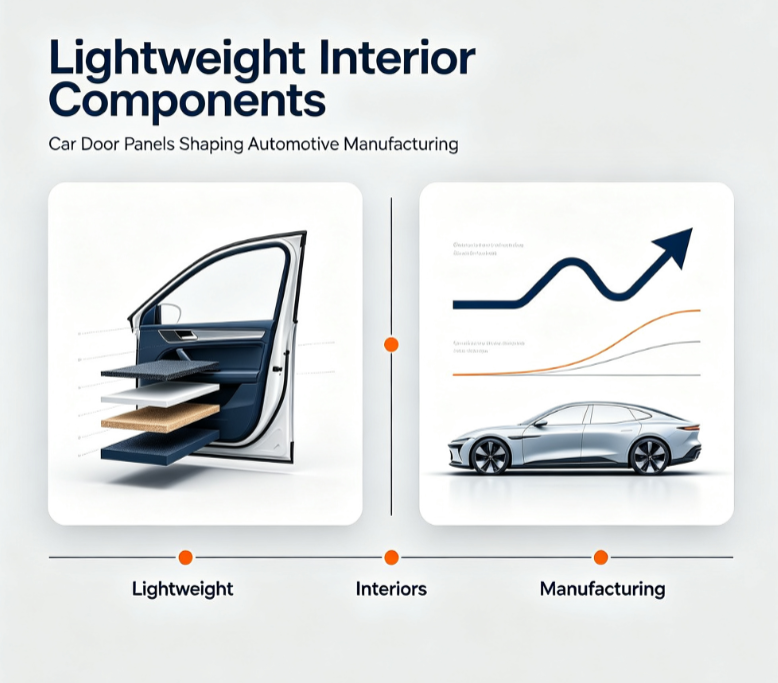
Car Door Panels: A Key Component Driving Modern Automotive Interior Innovation
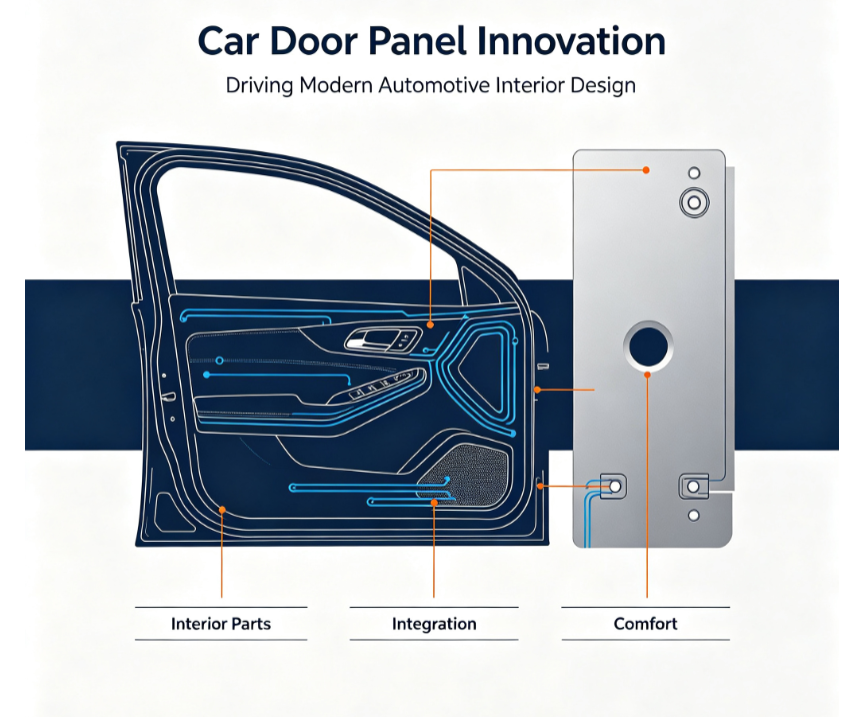
Introduction: Why Car Door Panels Matter More Than Ever
When people think about automotive design, they often focus on engines, exterior styling, or intelligent driving systems. However, inside every vehicle, the interior components directly influence the user experience every day.
Among these components, Car Door Panels play a much bigger role than simply covering the inside structure of a vehicle door.
Modern car door panels are responsible for combining multiple functions, including interior aesthetics, passenger comfort, noise reduction, safety support, and component integration. As automotive manufacturers move toward lightweight vehicles, electric mobility, and smarter cabin designs, the requirements for door panel manufacturing are becoming increasingly advanced.
Today’s automotive industry is looking for door panel solutions that can achieve:
· Lightweight construction
· High durability
· Excellent surface quality
· Efficient production
· Flexible customization
With global vehicle production continuing to evolve, high-quality Car Door Panels have become an important part of automotive interior manufacturing.
Table of Contents
· What Are Car Door Panels?
· The Role of Car Door Panels in Modern Vehicles
· Materials Used in Automotive Door Panel Manufacturing
· Manufacturing Processes Behind High-Quality Door Panels
· Car Door Panels Material Comparison
· Key Factors Buyers Should Consider
· Global Trends Driving Automotive Interior Development
· How WZHI Auto Parts Supports Automotive Manufacturing
· Frequently Asked Questions
What Are Car Door Panels?
Car Door Panels are interior components installed on the inside surface of vehicle doors. They provide both functional and decorative features while covering the internal door structure.
A modern automotive door panel usually includes several integrated parts:
· Decorative surface layer
· Structural support components
· Armrest area
· Storage compartments
· Speaker mounting areas
· Control switch integration
· Sound insulation materials
Although they are visible interior components, car door panels must meet strict requirements related to appearance, durability, safety, and manufacturing precision.
For automotive manufacturers and suppliers, producing reliable door panels requires a combination of material expertise, molding technology, surface treatment capability, and quality control.
The Role of Car Door Panels in Modern Vehicles
Enhancing Interior Design and User Experience
The interior of a vehicle is where drivers and passengers spend most of their time.
Car door panels contribute significantly to the overall cabin experience through:
· Visual appearance
· Touch feeling
· Ergonomic design
· Material texture
Automotive brands increasingly use interior design to differentiate their vehicles, making door panel appearance and finishing quality more important than before.
Supporting Noise Reduction
Vehicle noise control has become an important factor in automotive comfort.
Door panels work together with insulation materials and sealing systems to help reduce:
· Road noise
· Wind noise
· Mechanical vibration
This is especially important for electric vehicles because the lower engine noise level makes other sounds more noticeable.
Improving Lightweight Vehicle Design
Weight reduction is a major focus in modern automotive engineering.
Reducing vehicle weight can help improve:
· Fuel efficiency
· Battery range for electric vehicles
· Driving performance
Manufacturers are increasingly using lightweight materials and optimized structures in interior components, including door panels.
Automotive Requirement | Industry Challenge | Car Door Panel Solution |
Better cabin comfort | Need for lower interior noise | Integrated acoustic design |
Vehicle lightweighting | Reduce component weight | Lightweight plastic and composite materials |
Interior customization | Different design expectations | Flexible molding and finishing technologies |
Production efficiency | Large-scale manufacturing demand | Automated manufacturing processes |
Materials Used in Automotive Door Panel Manufacturing
Material selection directly affects the performance and cost of car door panels.
Different vehicle models may require different material solutions depending on design goals and market positioning.
Polypropylene (PP)
Polypropylene is one of the most commonly used materials in automotive interior components.
Advantages include:
· Lightweight characteristics
· Good impact resistance
· Cost efficiency
· Easy processing
It is widely used in mass-production vehicles where manufacturers need stable quality and competitive pricing.
Acrylonitrile Butadiene Styrene (ABS)
ABS materials are known for good appearance quality and processing performance.
They are commonly used for interior components requiring:
· Smooth surface finishing
· Good dimensional accuracy
· Decorative appearance
Composite Materials
Advanced composite materials are becoming increasingly important in automotive applications.
They can provide:
· Higher strength-to-weight ratio
· Improved structural performance
· Design flexibility
These materials are especially valuable as automotive manufacturers continue exploring lightweight solutions.
Manufacturing Processes Behind High-Quality Door Panels
Producing automotive door panels requires precise manufacturing control.
Injection Molding
Injection molding is one of the most common processes used for automotive interior components.
It provides advantages such as:
· High production efficiency
· Consistent dimensions
· Complex shape capability
This makes it suitable for large-volume automotive manufacturing.
Surface Finishing
The appearance of car door panels is a major factor affecting customer perception.
Common finishing methods include:
· Texturing
· Surface coating
· Decorative layers
· Soft-touch treatments
High-quality surface finishing helps create a better interior experience.
Assembly Integration
Modern door panels often integrate multiple functional components.
Manufacturers need to ensure accurate assembly of:
· Handles
· Switches
· Speakers
· Storage compartments
· Decorative elements
Precision during assembly directly affects final vehicle quality.
Car Door Panels Material Comparison
Material Type | Main Advantages | Typical Applications |
PP Plastic | Lightweight, economical, impact resistant | Mass-market vehicles |
ABS Plastic | Good appearance and processing performance | Interior decorative parts |
Composite Materials | Strong performance and weight advantages | Premium and advanced vehicles |
Fabric/Leather Surface Layers | Improved visual and tactile experience | Higher-end interior designs |
Selecting the right material depends on factors such as vehicle category, production volume, performance requirements, and cost targets.
Key Factors Buyers Should Consider
For automotive manufacturers and distributors, selecting a reliable Car Door Panels supplier requires evaluating several important factors.
Dimensional Accuracy
Automotive components must fit precisely during vehicle assembly.
Poor dimensional control may cause:
· Assembly difficulties
· Noise issues
· Interior quality problems
Surface Quality
Since door panels are visible components, appearance quality directly affects customer perception.
Important considerations include:
· Surface consistency
· Color matching
· Texture quality
· Finishing durability
Material Performance
Different applications require different material characteristics.
Suppliers should provide solutions based on:
· Impact requirements
· Environmental conditions
· Weight targets
· Vehicle design needs
Production Capability
Automotive supply chains require stable production capacity.
A reliable supplier should have:
· Consistent manufacturing processes
· Quality inspection systems
· Ability to support large-volume orders
Global Trends Driving Automotive Interior Development
The automotive interior industry is experiencing significant changes.
Electric Vehicle Growth
The expansion of electric vehicles is changing interior design priorities.
Because electric vehicles produce less engine noise, manufacturers are paying more attention to:
· Cabin acoustics
· Material quality
· Interior comfort
This creates new opportunities for advanced door panel solutions.
Lightweight Automotive Design
Global automotive manufacturers continue focusing on weight reduction.
Lightweight interior components help improve overall vehicle efficiency, especially for electric vehicles where battery performance is critical.
Smart Interior Integration
Modern vehicles increasingly include:
· Digital controls
· Integrated electronics
· Advanced user interfaces
Car door panels are evolving from simple decorative parts into multifunctional interior systems.
Customized Interior Experiences
Consumers increasingly expect personalized vehicle experiences.
This trend is driving demand for:
· Different surface designs
· Premium materials
· Flexible manufacturing solutions
How WZHI Auto Parts Supports Automotive Manufacturing
Automotive suppliers play an important role in helping vehicle manufacturers achieve stable production and consistent quality.
WZHI Auto Parts focuses on automotive component solutions designed to meet modern vehicle manufacturing requirements.
By supporting customers with reliable Car Door Panels and related automotive interior components, the company helps manufacturers improve interior quality, production efficiency, and product competitiveness.
As automotive technology continues developing toward electrification and intelligent mobility, reliable interior component suppliers will remain essential partners throughout the global automotive supply chain.
Frequently Asked Questions
1. What are Car Door Panels used for?
Car Door Panels provide interior decoration, structural coverage, noise control support, and integration space for various vehicle functions.
2. What materials are commonly used for Car Door Panels?
Common materials include polypropylene, ABS plastics, and composite materials depending on vehicle requirements.
3. Why are lightweight materials important for automotive door panels?
Lightweight materials help reduce overall vehicle weight, improving efficiency and supporting electric vehicle range performance.
4. How do manufacturers ensure Car Door Panels meet quality requirements?
Manufacturers use controlled molding processes, dimensional inspection, surface quality checks, and production management systems.
Conclusion
As vehicles continue becoming lighter, smarter, and more comfortable, Car Door Panels are evolving into important automotive interior components that combine design, functionality, and engineering performance.
From material selection and manufacturing precision to acoustic performance and customization capability, modern door panels require advanced production solutions.
For automotive companies seeking reliable interior components, choosing an experienced supplier can help improve product quality, maintain supply stability, and support long-term market competitiveness.
WZHI Auto Parts continues to support automotive manufacturers by providing solutions designed for the changing needs of modern vehicle interiors.